Elysia Anderson
As of 2026, Kimono Club has invited those close to us to speak more about their experience dressing in wafuku (Japanese-style apparel). Part of our mission as a club involves preserving many of the oral histories of Japantown and the surrounding area. For many people within and close to our club, their love for Japanese-style garments is rooted in lifelong memories. This post is a part of the ongoing “Kimono Stories” series.
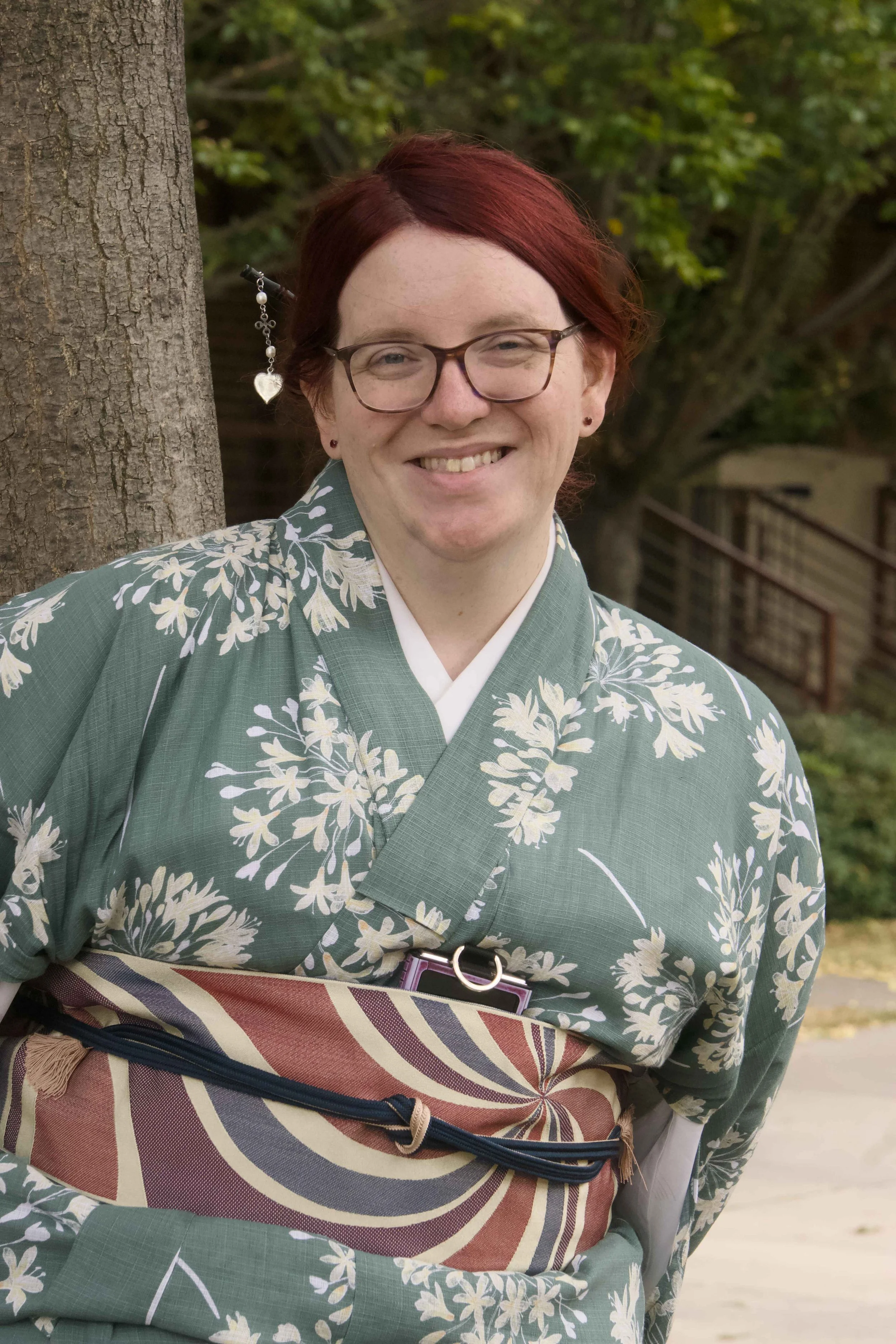
Elysia Anderson, Kimono Club Member
Kimono, to me, is not only beauty, elegance, and grace, but also connection and community. My grandparents lived in Japan for about a decade, and my father was born and partially raised there. We're originally Irish, but my grandmother brought much of the culture shared with her back from Japan. As soon as she was able, she looked to connect with the Nikkei community here when she moved back to the US.
I'd wanted to learn how to wear a kimono since I was little. It was important to me that I approached learning kitsuke with sincerity, authenticity, and respect, both for my family and our unique cultural background, and for others who might get the wrong impression that it's being worn as a costume.
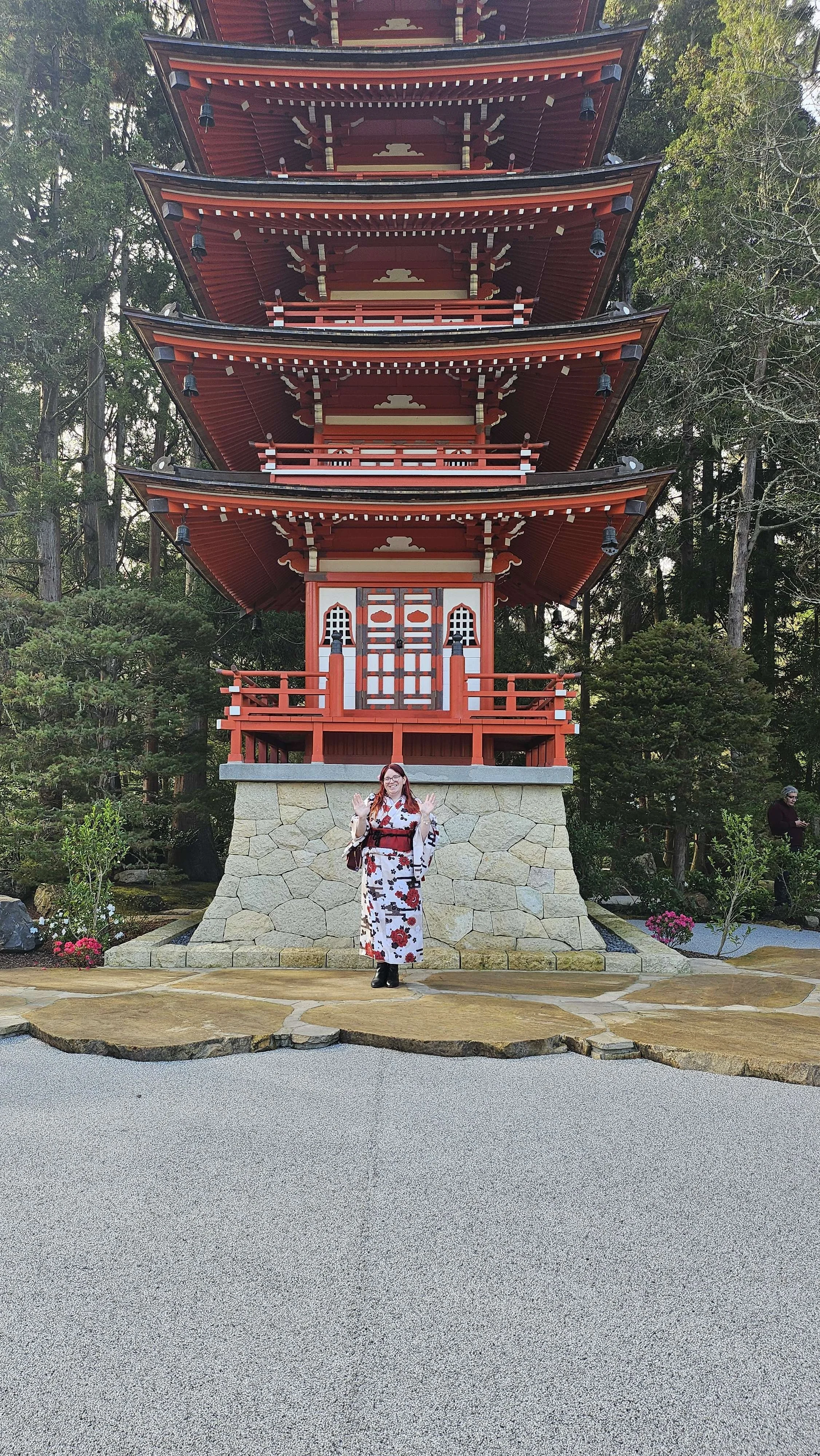
Every time I put kimono on, I think a little to my family's history; every step I take in my zōri are footfalls continuing after my grandparents.
Every time I enter a restaurant, shop, or just walking by, and someone grins, happy to see their culture represented in the public space, it fills my heart with joy. To be able to share that connection, that understanding through clothing - kimono is one of but many avenues. It is my hope that act emboldens others to proudly display their own culture, too.
I am so thankful for all the connections I have made through kimono, my friends I've met, and both of my kitsuke teachers, Billy-sensei and Megumi-sensei. The threads that weave hearts together are just as important to me as the ones that weave these beautiful garments together— if not more so.